.png "Seth Trading Company")
BIS 19412:2025. Explained – The New BIS Rule Transforming India’s Agarbatti Industry
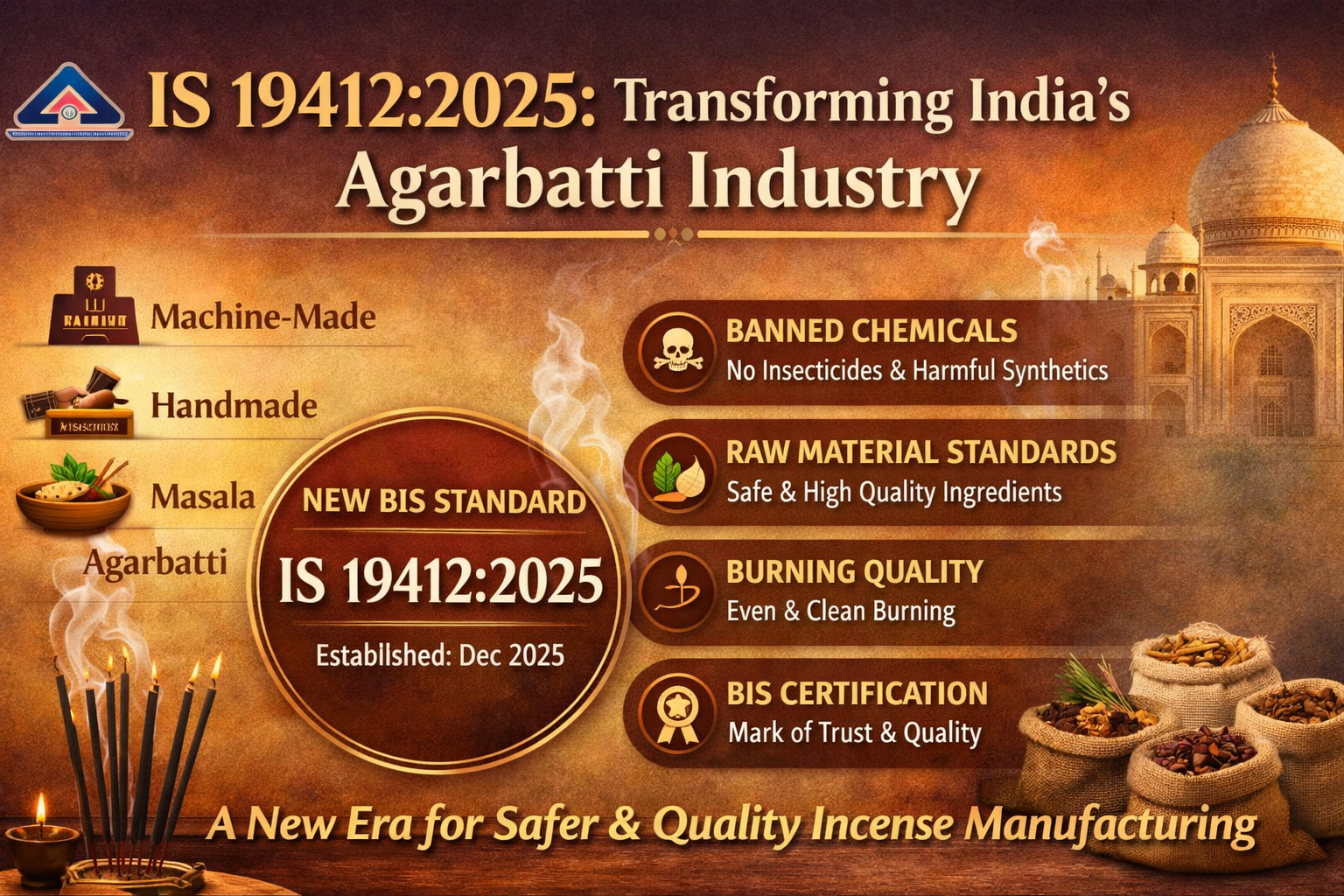
The Indian agarbatti industry is entering a new era of regulation, quality, and global opportunity. For decades, incense sticks have been an integral part of Indian culture, symbolizing spirituality, peace, and tradition. From daily Pooja rituals to large-scale exports, this industry has grown massively, yet until recently, it operated without a unified national standard.
That changed in December 2025, when the Bureau of Indian Standards introduced BIS 19412:2025, the first official standard dedicated to agarbattis. For incense stick fragrance manufacturers, this is not just a regulatory update it is a turning point that directly impacts formulations, compliance, and market positioning.
The Growing Scale of India’s Agarbatti Market
India is the world’s largest producer and exporter of agarbattis, with an industry value of approximately ₹8,000 crore. Exports alone contribute around ₹1,200 crore annually, reaching more than 150 countries. The sector supports over five lakh livelihoods, particularly women working in small-scale and home-based units.
Despite this scale, the absence of clear quality and safety standards led to inconsistencies in product quality and increasing challenges in international markets.
Why IS 19412:2025 Was Introduced
Over time, certain practices began to raise concerns within the industry. Some manufacturers started using insecticides in incense sticks to create mosquito repellent. variants, while others relied on low-cost synthetic chemicals to enhance fragrance or reduce production costs.
Although these methods improved short-term profitability, they posed serious risks:
- Health hazards due to indoor air pollution
- Environmental concerns
- Rejection in global markets due to non-compliance
IS 19412:2025 was introduced to address these issues and align Indian manufacturing with international safety standards.
Key Highlights of IS 19412:2025
Standardized Product Classification
For the first time, agarbattis are officially categorized as the following:
- Machine-made agarbattis
- Handmade agarbattis
- Traditional masala agarbattis
This ensures more relevant and practical quality guidelines for different production methods.
Raw Material & Fragrance Regulations
The standard defines strict quality benchmarks for all raw materials, especially fragrance compounds. Manufacturers must ensure transparency and safety in every ingredient used.
Burning Performance Standards
Agarbattis must now meet measurable criteria, including:
- Even and consistent burning
- Stable fragrance release
- Controlled ash formation
This improves overall product reliability and user experience.
Banned Chemicals You Must Remove
One of the most critical aspects of IS 19412:2025 is the prohibition of harmful chemicals.
Insecticides (Now Banned)
- Allethrin
- Permethrin
- Cypermethrin
- Deltamethrin
- Fipronil
Synthetic Fragrance Compounds (Now Restricted)
- Benzyl Cyanide
- Ethyl Acrylate
- Diphenylamine
These substances are already restricted in many global markets due to health and environmental risks.
What This Means for Fragrance Manufacturers
For incense stick fragrance manufacturers, this standard brings both challenges and opportunities. Existing formulations may need to be revised, especially if they contain any banned substances. However, this transition also allows businesses to upgrade their product quality and expand into premium markets.
Manufacturers who adapt quickly will gain a strong competitive advantage, particularly in exports where safety compliance is crucial.
BIS Certification – A Competitive Advantage
Once compliant, manufacturers can apply for the BIS Standard Mark. This certification acts as a powerful trust signal in the market.
Benefits of BIS Certification:
- Increased credibility with buyers and distributors
- Easier access to international markets
- Higher acceptance in retail and e-commerce
- Eligibility for institutional contracts
- Opportunity for premium pricing
How to Get Compliant with IS 19412:2025
The compliance process can be simplified into key steps:
1. Audit Your Current Formulations
Review all raw materials and verify ingredients with suppliers.
2. Reformulate Products
Work with fragrance experts to replace banned substances.
3. Conduct Lab Testing
Get your products tested at BIS-approved laboratories.
4. Apply for Certification
Submit your application through the BIS process and complete the inspection.
5. Leverage MSME Support
Government schemes like SFURTI and CLCSS can help reduce costs and support certification.
The Bigger Opportunity: Premium & Export Markets
Global demand is shifting toward natural, safe, and sustainable products. Consumers today are more aware and willing to pay higher prices for certified and chemical-free incense products.
IS 19412:2025 provides Indian manufacturers with a clear pathway to tap into this demand. Businesses that align early will be better positioned to:
- Enter premium segments
- Build trusted brands
- Expand globally
Final Thoughts
IS 19412:2025 is more than just a regulatory framework—it is a growth opportunity for the Indian agarbatti industry. It brings structure, safety, and global alignment, helping manufacturers build stronger and more sustainable businesses.
For incense stick fragrance manufacturers, the message is clear: adapt early, upgrade your formulations, and move towards certification. Those who take action now will not only stay compliant but also lead the future of the industry.
