.png "Seth Trading Company")
Fragrance manufacturers in India
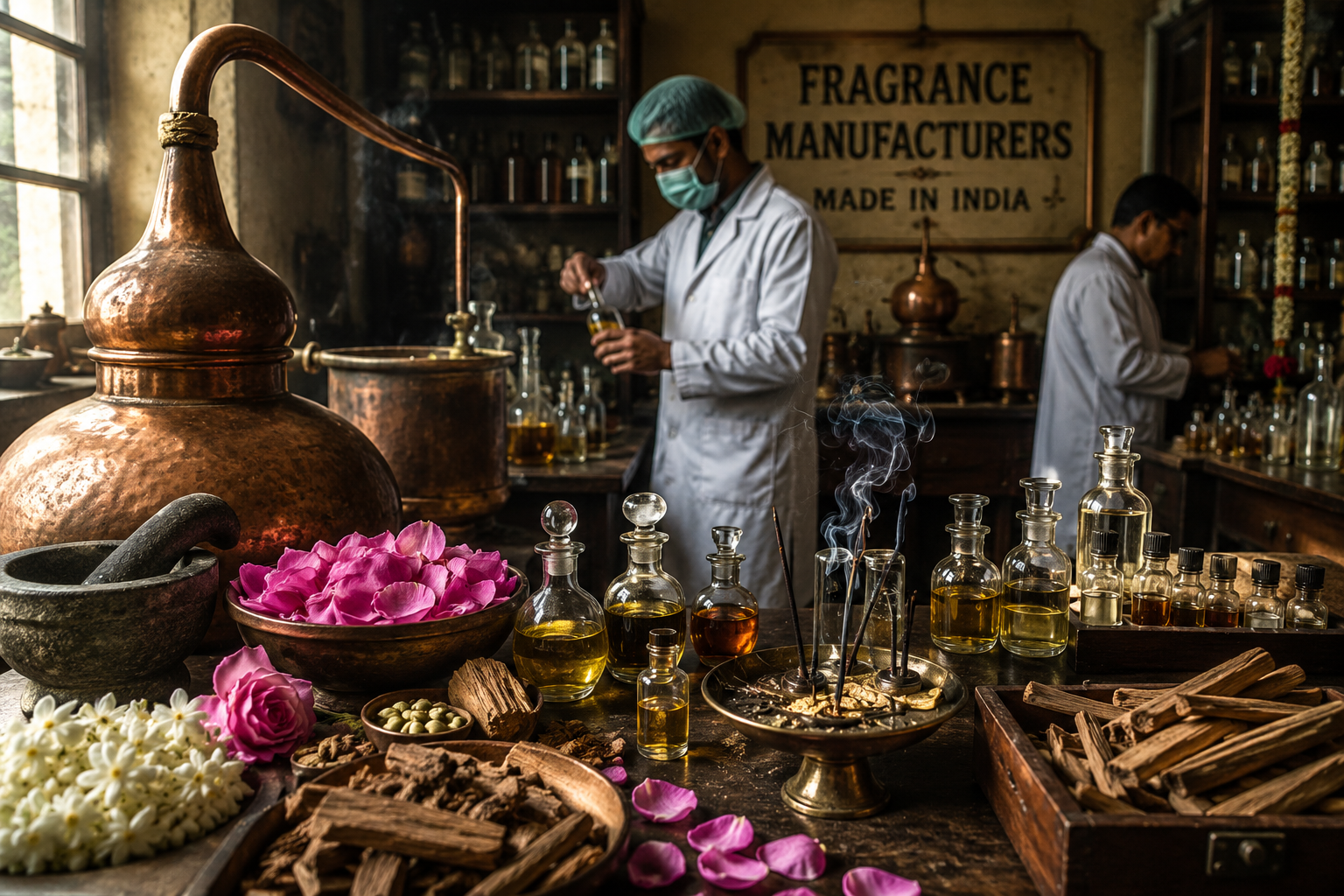
There’s something about fragrance that words never fully capture. One smell and suddenly you’re somewhere else - maybe in your grandmother’s kitchen while something warm is cooking, or maybe inside a luxury store in Mumbai. Fragrance works like memory. Quietly, instantly.
What’s interesting is that most people enjoy fragrances every single day without really thinking about where they come from.
And if you dig a little deeper, you’ll realize something surprising: a massive part of the global fragrance supply chain is connected to fragrance manufacturers in India.
Not just perfumes. We’re talking about agarbattis, incense sticks, soaps, detergents, candles, room fresheners, cosmetics - almost every category where smell matters.
India has been doing this for a very long time. Long before “luxury fragrance” became a trend online.
India’s relationship with fragrance goes way back
Before fragrance became an industry, it was already part of Indian culture. Sandalwood in the south, rose attars from Kannauj, jasmine oils from Tamil Nadu, vetiver roots from Rajasthan - these weren’t premium lifestyle products back then. They were simply part of life.
That traditional knowledge slowly evolved into a serious manufacturing ecosystem. Today, fragrance manufacturers in India supply everyone from local agarbatti brands to international FMCG companies.
And honestly, that transition from traditional craftsmanship to industrial-scale production is probably one of the reasons India has become so competitive in this space.
What fragrance manufacturers actually do
A lot of people assume fragrance manufacturers just “make perfumes.” That’s only a small part of it. Most fragrance manufacturers develop fragrance compounds - blends made using natural oils, aroma chemicals, extracts, fixatives, and other ingredients designed for specific applications.
A fragrance for soap behaves differently from one used in incense sticks. A room freshener fragrance performs differently compared to a detergent fragrance. Even heat changes how a fragrance reacts.
That’s why these companies usually work with :
- perfumers
- aroma chemists
- essential oil distillers
- application experts
- quality control teams
It’s technical work mixed with creativity. And honestly, getting a fragrance right takes a lot more trial and testing than people think.
Kannauj still matters - a lot
You really can’t discuss fragrance manufacturers in India without mentioning Kannauj.
For generations, the city has been known for its traditional attar-making heritage. Even today, many manufacturers there still use old distillation methods like deg-bhapka to create natural attars.
And some fragrances coming out of Kannauj are genuinely impossible to replicate properly.
Mitti Attar is probably the best example. That earthy “smell of first rain” aroma? It’s iconic for a reason.
At the same time, modern fragrance manufacturing has expanded far beyond Kannauj. Cities like Mumbai, Ahmedabad, Delhi, and Bengaluru now have large-scale fragrance companies working with domestic and export clients across multiple industries.
Incense stick fragrance manufacturers in India are in a category of their own
This segment doesn’t get talked about enough.
Creating fragrances for incense sticks is completely different from creating fragrances for perfumes or cosmetics. The fragrance has to survive heat, burn evenly, stay stable during storage, and still smell pleasant throughout the burn cycle.
That’s not easy. Incense stick fragrance manufacturers in India have spent decades understanding this category because incense has always had cultural importance here. But now the market is global.
Indian incense products are exported almost everywhere - from the Middle East to Europe and North America - for meditation, wellness, aromatherapy, yoga spaces, and home fragrance use.
And because Indian manufacturers already have access to raw materials like sandalwood, rose, jasmine, mogra, and frankincense, they’ve built a strong advantage over time.
The agarbatti industry runs heavily on fragrance
India’s agarbatti market is massive. From low-cost daily-use agarbattis sold in local shops to premium handmade products, fragrance is what usually defines the product experience.
That’s where agarbatti fragrance manufacturers in India come in.
Most manufacturers in this segment offer :
- ready-to-use fragrance compounds
- custom fragrance development
- herbal fragrance options
- bulk supply solutions for factories
What’s interesting is how different the fragrance requirements are across price segments. A fragrance designed for a ₹10 retail pack is developed very differently from one created for premium export products.
And manufacturers have to balance all of that while keeping performance, pricing, and consistency under control.
So why are Indian fragrance manufacturers growing globally?
A few reasons, honestly. First, raw material access. India naturally has a huge variety of aromatic crops and botanicals.
Second, experience. Many fragrance businesses are family-run companies with decades of formulation knowledge behind them.
Third, flexibility. Indian manufacturers are usually more open to customization compared to many large international suppliers.
And finally, pricing. Global brands are constantly trying to balance quality with cost, and Indian suppliers often manage to offer both reasonably well.
The gap between Indian and international fragrance manufacturing standards has also reduced a lot in recent years because companies are investing more in R&D, testing labs, compliance, and trained perfumers.
Things buyers should actually check before choosing a manufacturer
If someone is sourcing fragrances from India, a few things matter more than flashy marketing.
Check whether the manufacturer can provide:
- IFRA or ISO certifications
- Safety Data Sheets (SDS)
- sampling support
- consistent bulk supply
- reasonable lead times
And honestly, communication matters too. Fragrance development usually involves revisions, testing, feedback, and adjustments. A manufacturer that understands your product properly is usually more valuable than one offering the cheapest rate.
The Future of Fragrance Manufacturing
The fragrance industry in India has quietly grown into something much bigger than most people realize.
Whether it’s luxury perfumery, incense sticks, agarbattis, home care, or personal care products, fragrance manufacturers in India now play an important role in global supply chains.
And maybe what makes Indian fragrance manufacturing different is that it never became purely industrial. There’s still culture behind it. Memory behind it. Tradition behind it.
That human side of fragrance - the part connected to emotion and familiarity - is probably why Indian-made fragrances continue to stand out.
